
MEDIC — Healthcare & Data Innovation Center
ผลงานของศูนย์
ผลงานวิจัย นวัตกรรม และการเผยแพร่ทางวิชาการ

Bladder Cancer Detection Web Application
Bladder Cancer Detection Web Application is an AI-powered platform designed to assist in the automated classification of bladder cancer TNM staging (T1–T4) from MRI images. The system enables users to upload MRI scans for rapid prediction and staging support, helping improve diagnostic efficiency and clinical decision-making through intelligent image analysis. Data source: Kaggle website (https://www.kaggle.com/datasets/shirtgm/bladder-cancer-classification). Research Published: Katongtung, P., Shiangjen, K., Cholamjiak, W., & Naravejsakul, K. (2026). MRI-Based Bladder Cancer Staging via YOLOv11 Segmentation and Deep Learning Classification. Diseases, 14(2), 45. https://www.mdpi.com/2079-9721/14/2/45
Open link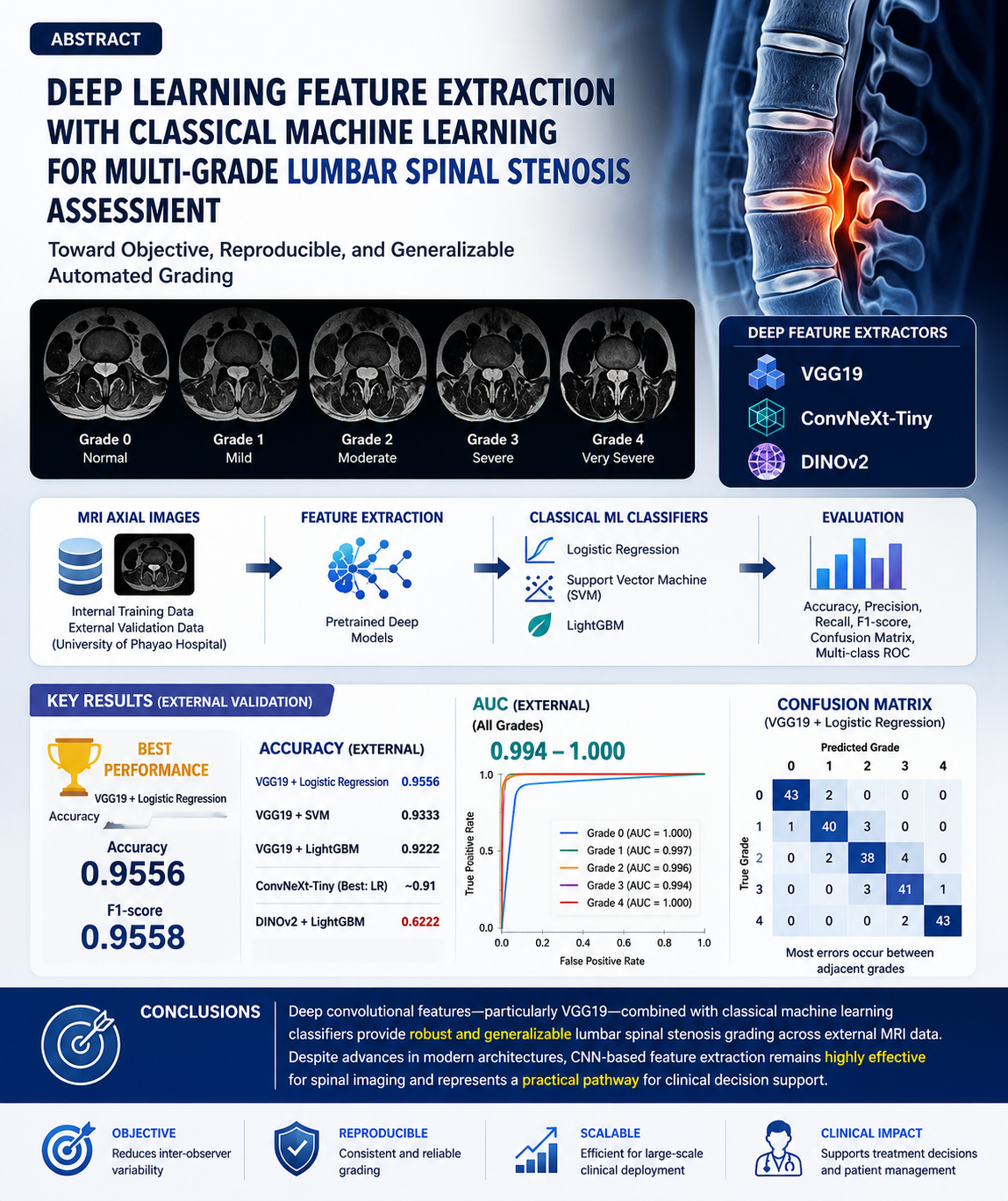
Multi-Task Deep Learning Model for Automated Detection and Severity Grading of Lumbar Spinal Stenosis on MRI: Multi-Center External Validation
Udomluck, P., Cholamjiak, W., Inpun, J., & Waratamrongpatai, W. (2026). Multi-Task Deep Learning Model for Automated Detection and Severity Grading of Lumbar Spinal Stenosis on MRI: Multi-Center External Validation. Diseases, 14(1), 32.
Open link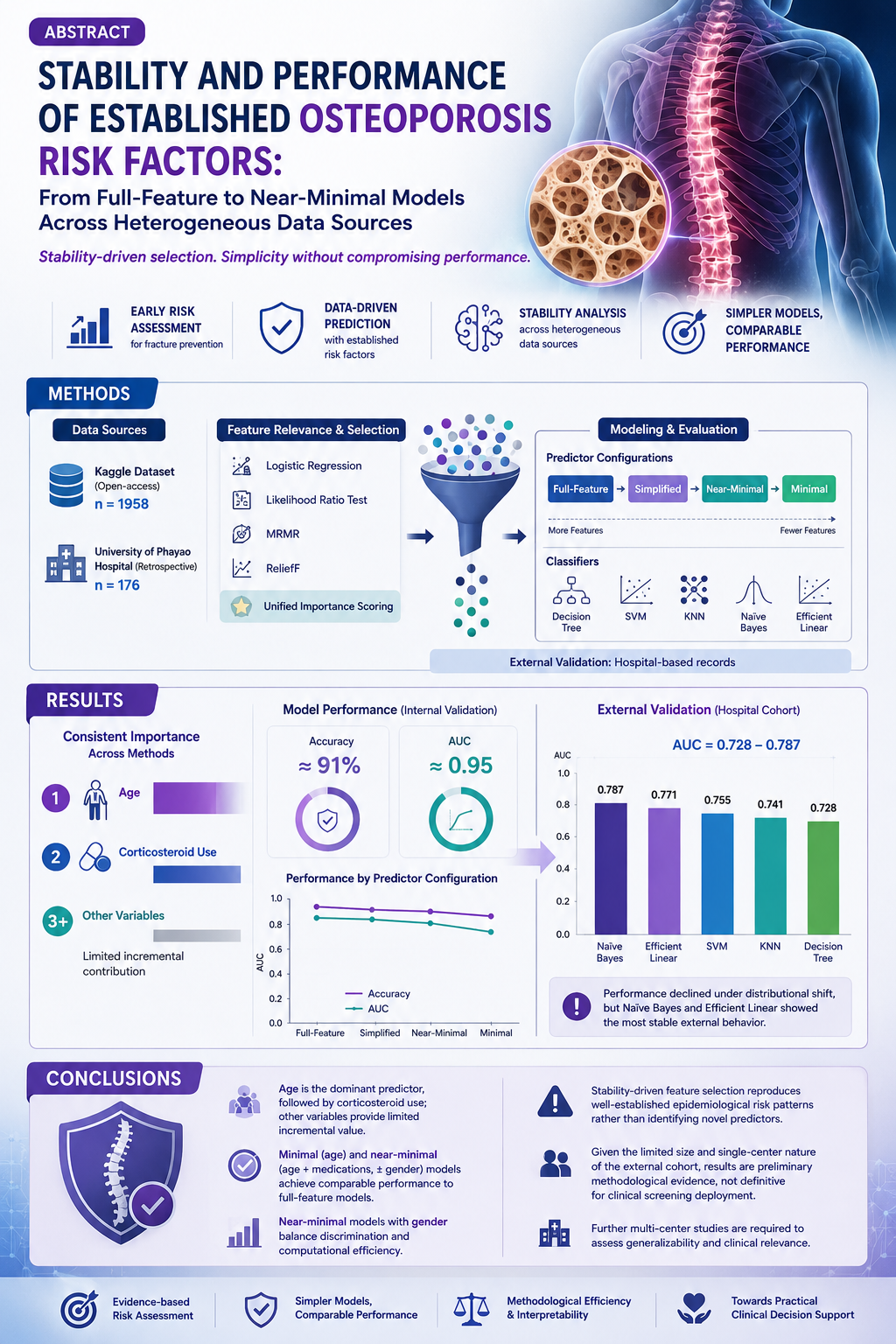
Stability-Driven Osteoporosis Screening: Multi-View Consensus Feature Selection with External Validation and Sensitivity Analysis
Waratamrongpatai, W., Cholamjiak, W., Eiamniran, N., & Udomluck, P. (2026). Stability-Driven Osteoporosis Screening: Multi-View Consensus Feature Selection with External Validation and Sensitivity Analysis. Journal of Clinical Medicine, 15(2), 677.
Open link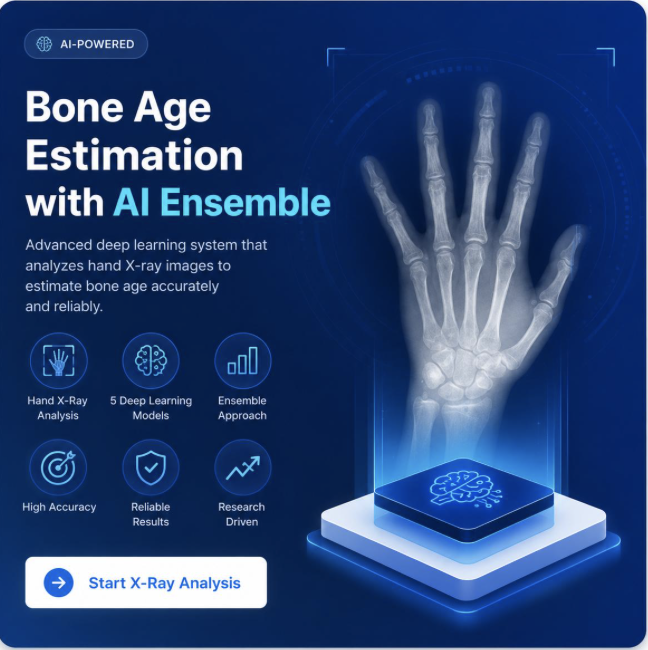
Bone Age Estimation System
This AI-powered Bone Age Estimation System uses an ensemble of five top-performing deep learning models combined with a novel mathematical optimization algorithm for weighted averaging to analyze hand X-ray images and estimate skeletal age with high accuracy. The platform integrates advanced medical imaging, AI ensemble learning, and mathematical modeling to provide reliable, research-driven, and clinically supportive bone age predictions. Data source: RSNA Bone Age in Kaggle Website (https://www.kaggle.com/datasets/kmader/rsna-bone-age).
Open link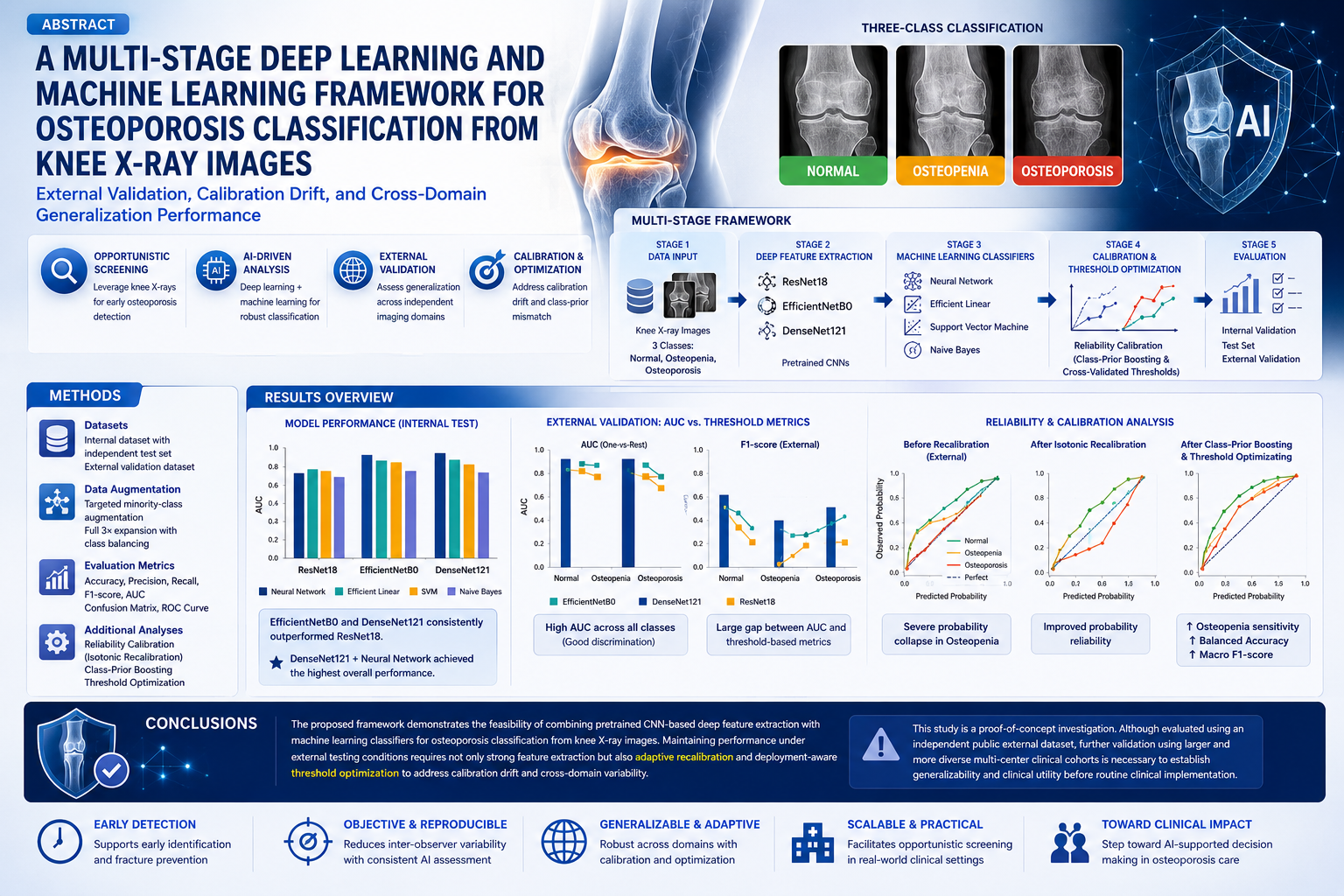
Opportunistic Osteoporosis Screening from Routine Knee Radiographs Using a Multi-Stage CNN Framework with External Validation
Sinnathakorn, N., Fahpinyo, C., Cholamjiak, W., & Suantai, S. (2026). Opportunistic Osteoporosis Screening from Routine Knee Radiographs Using a Multi-Stage CNN Framework with External Validation. Journal of Clinical Medicine.
Open link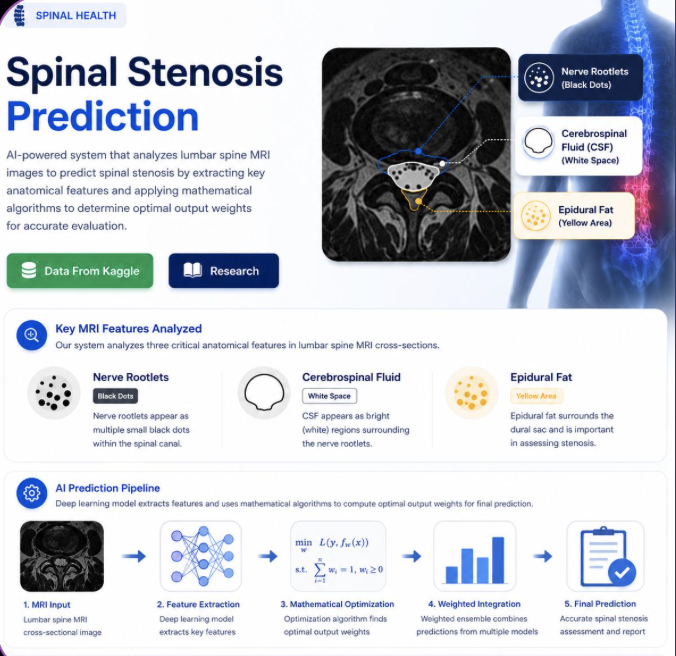
Spinal Stenosis Prediction
Spinal Stenosis Prediction: AI-powered spinal stenosis analysis system combines deep learning with mathematical optimization algorithms to estimate optimal output weights for accurate MRI-based prediction. The framework analyzes key spinal features, including nerve rootlets, cerebrospinal fluid, and epidural fat, to provide reliable and research-driven assessment support. Data source: Kaggle website (https://www.kaggle.com/competitions/rsna-2024-lumbar-spine-degenerative-classification). Research Published: Paimsang, P., Liawrungrueang, W., Inpan, J., Katongtung, P., Shiangjen, K., Yao, J. C., ... & Cholamjiak, W. (2026). Double Inertial Shrinking Projection Algorithm for Fixed Point Problems with Deep Learning Integration for Lumbar Spinal Stenosis Detection. Carpathian Journal of Mathematics, 42(3), 661-678. https://www.jstor.org/stable/27487181
Open link